
ART FAIRCHILD
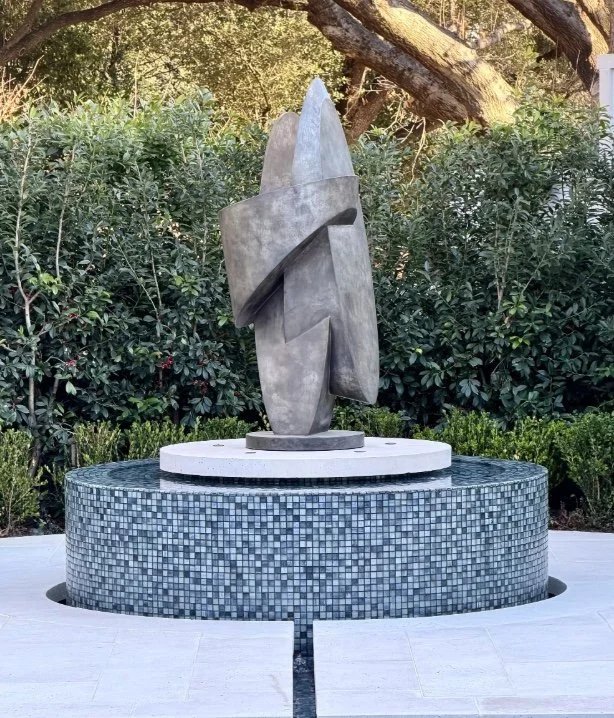
Art Fairchild is a contemporary sculptor whose work explores the interplay of shape, form, balance, and movement, bringing together the precision of engineering with the intuition and freedom of artistic expression. Working primarily with steel, glass, and industrial materials, Fairchild creates sculptures that range from restrained, minimalist compositions to complex constructions built through repetition, geometry, and mathematical arrays.
His work is grounded in a fascination with opposing forces: simplicity and complexity, order and chaos, mass and weightlessness, precision and spontaneity. Drawing upon the geometric abstraction, industrial materials, and formal investigation associated with modernist sculpture, Fairchild extends these ideas through a contemporary practice that emphasizes movement, interaction, and the viewer’s physical experience of the work.
Repetition is an important element of his visual language. Individual components—steel tubes, bolts, geometric forms, glass panels, and other structural elements—are multiplied, organized, interrupted, and reconfigured to create larger compositions. The resulting works reveal an underlying mathematical logic while retaining a sense of unpredictability and discovery.
Fairchild’s creative process reflects the duality at the heart of his practice. He combines a rigorous understanding of construction and engineering with a deeply intuitive approach to composition. Proportion, spacing, mass, balance, and structural relationships are carefully considered, yet he allows the work to evolve during fabrication. Self-imposed parameters provide order, but Fairchild recognizes that sometimes the most important moment occurs when those rules are changed.
He describes the progression of his practice through four ideas: Wonder. Intuition. Realization. Joy. A sculpture may begin with a deceptively simple question—what happens when randomness encounters perfect geometry, when something visually massive moves effortlessly, or when an industrial material is made to appear delicate? Engineering allows Fairchild to realize these ideas physically, while intuition determines when a composition has found its balance.
Fairchild studied art in college, but his professional career designing, engineering, and producing large-scale trade-show environments further developed the technical expertise that became integral to his sculpture. That experience strengthened his ability to move fluidly between concept, design, fabrication, and physical realization.
Kinetic and optical experiences also appear throughout his practice. Ball bearings can allow substantial sculptural forms to move with unexpected ease, while handmade glass panels suspended within geometric steel structures respond to changing light and viewpoint. The viewer’s movement around the sculpture becomes part of the work, continually altering relationships between positive and negative space, transparency and solidity, structure and environment.
Ultimately, Fairchild seeks the point at which engineering becomes sculptural poetry. His work transforms the logic of construction into something experiential and expressive, inviting the viewer not simply to observe an object, but to engage with its balance, movement, materiality, and sense of possibility.
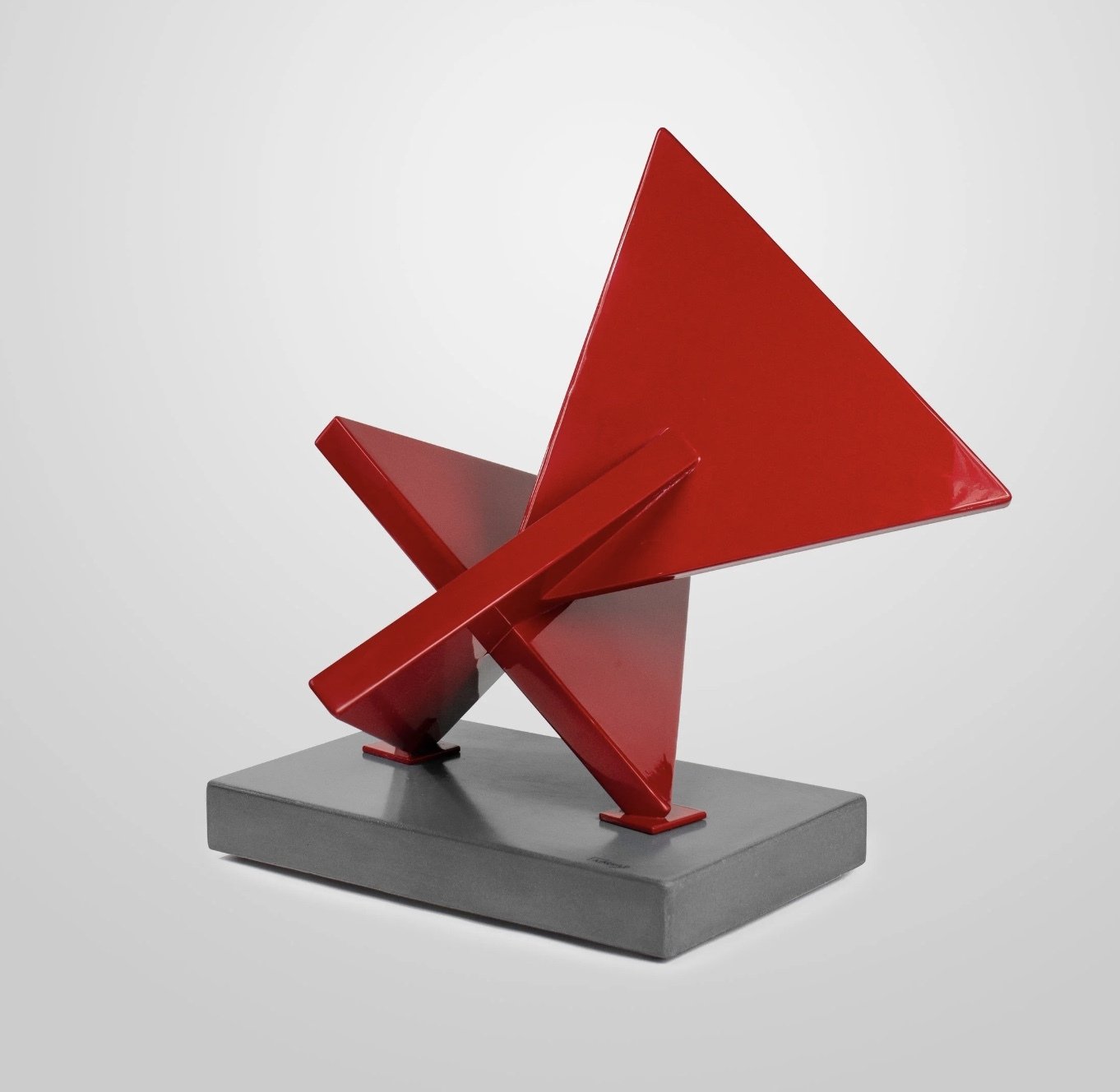
STAMPEDE, Painted Steel, 20 x 19 x 21"
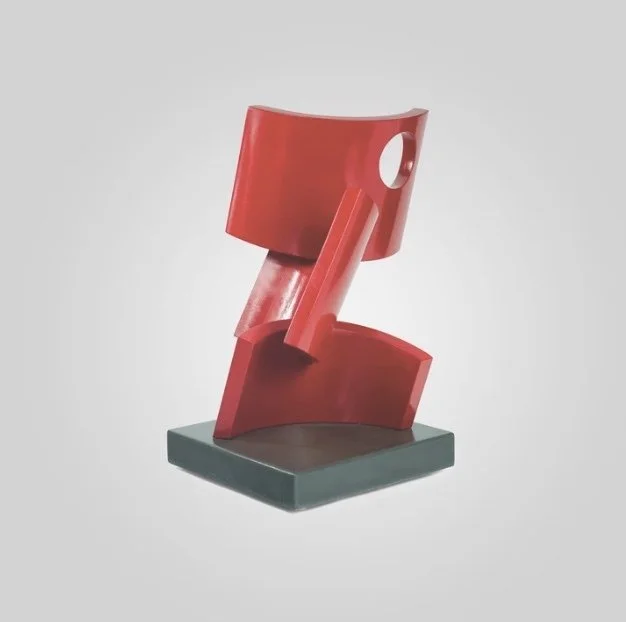
THREE SHEETS, Polyvinyl Chloride, Automotive Paint, 21 x 16 x 13"
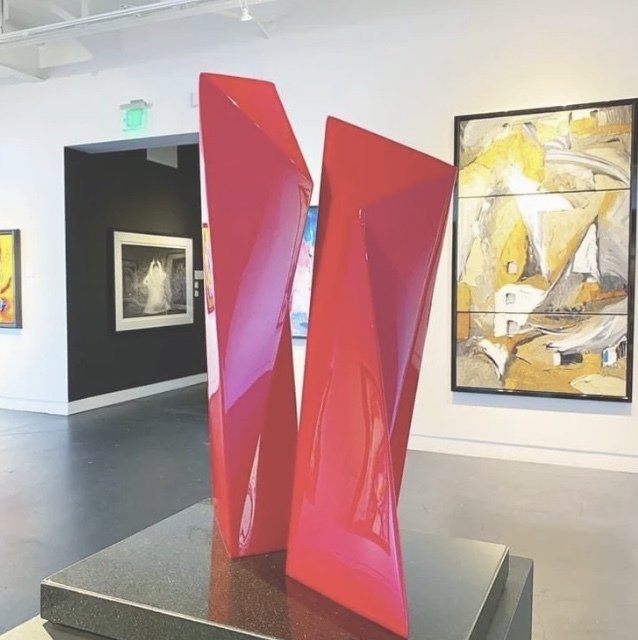
TANGO, Painted Stainless Steel, 24 x 17 , 12.5"
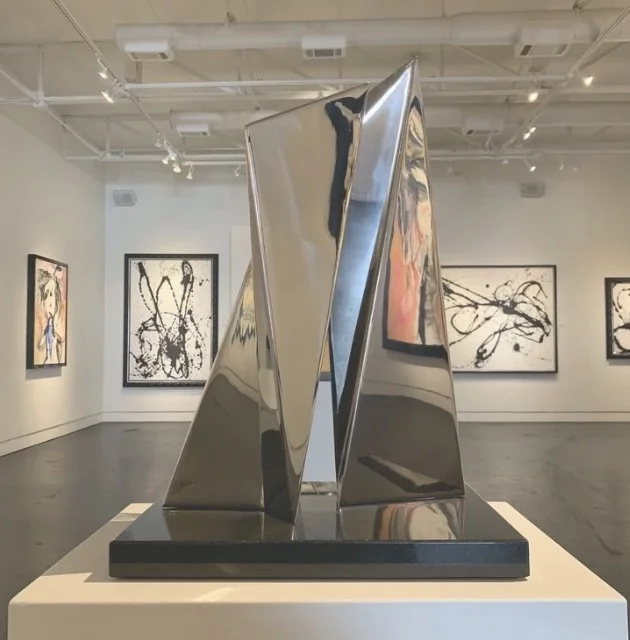
TANGO NUEVO II, Polished Stainless Steel, 23 x 16.75 x 12.5
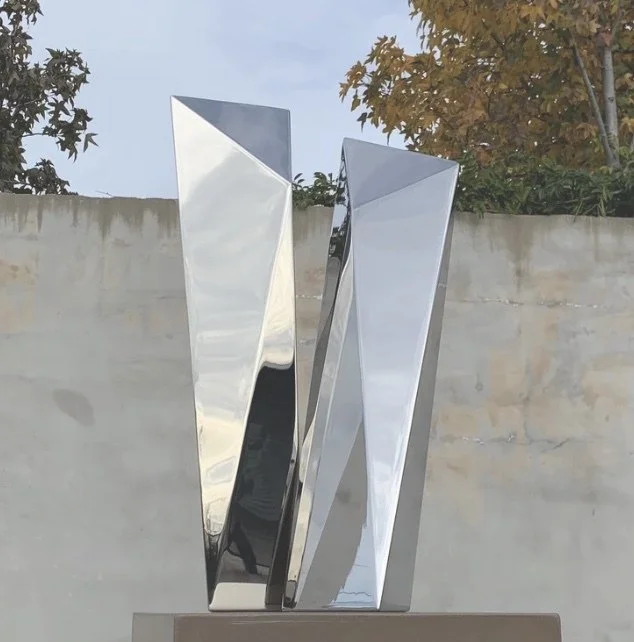
Tango Nuevo, Polished Stainless Steel, 32 x 23 x 17"
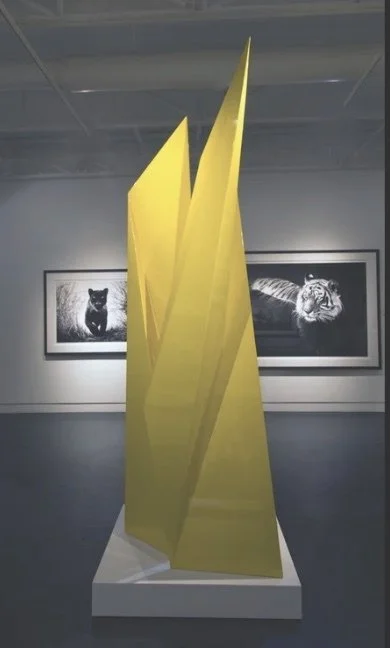
TWO STEP, Automotive Painted Steel, 115, 41, 38"
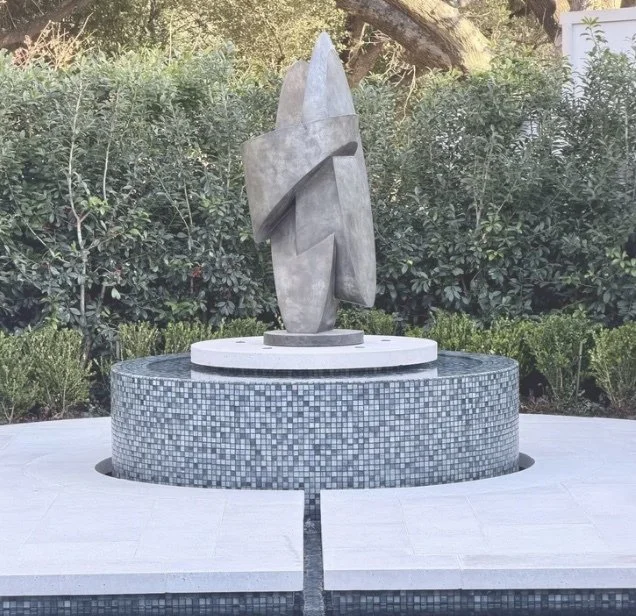
EMBRACE, 304 Stainless Steel, 65 x 25 x 20"